Word Search
- 4.8
- Rating
- 10.00M
- Installs
- Free
- Price

 Analysis by App-foxy
I first picked up Word Search for a short break and quickly understood why this kind of game works so well on a shared phone or tablet. There is no complicated story to follow, no account to explain, and no long tutorial standing between you and the puzzle. You look for words in a grid, pass the device to someone else, and return to it whenever you have a spare moment. That simple rhythm makes it unusually suitable for a household where several people use the same screen.
My experience with this game is best described as calm but quietly absorbing. It belongs to the word-game category, and Italic Games keeps the central idea focused rather than surrounding it with unnecessary systems. The result is a free title that is easy to understand within seconds, yet capable of filling a longer break when I want something more engaging than scrolling. Its 4.8 average from around 435 thousand ratings also matches my general impression: the appeal is broad because the basic activity is familiar and requires almost no gaming experience.
How Word Search fits into a shared household
When I think about Word Search in a shared household, I see its best role as a quiet activity people can take turns with, rather than a game that needs everyone gathered around at once. A useful next step is to agree on how much help is welcome: a small directional hint can keep a child involved, while calling out the whole word ends their search immediately.
You May Also Like

 Blood Strike: 2.5 Anniversary
Blood Strike’s Loadouts Turn Every Drop Into a Tactical Gamble
A close look at Blood Strike’s custom loadouts: how fast access to signature weapons reshapes its battle royale rhythm, rewards preparation, and narrows the gap between fights.

 Pandora - Music & Podcasts
Pandora’s Music Is Easy to Start, but Harder to Recover
Pandora’s strength is its low-effort path from a seed to a station. Its weak spot is how much confidence it asks you to place in connection, setup, and quiet recovery.

 8 Ball Pool
 Is Built on Rivalries, Rematches, and Routine
A close look at the rivalries, rematches, shared routines, and unanswered safety questions that turn a quick pool match into a persistent mobile community.

 Samsung Music
’s Quiet Strength Is Playing What You Already Own
Its reach comes less from spectacle than from dependable access to a personal library. That simplicity is both the app’s strongest retention engine and its ceiling.

 AccuWeather: Weather Radar
AccuWeather Review: A Quick, Clear Forecast for Everyday Decisions
For everyday plans, the best forecast is the one you can understand quickly. AccuWeather makes rain timing, radar, and local conditions easy to act on, with a few trade-offs.

 Hill Climb Racing
Why Hill Climb Racing Still Turns Crashes Into One More Run
A tiny car, a bumpy hill and one more upgrade: Hill Climb Racing keeps resurfacing because its simple chaos makes every near-miss feel personal.
More From Our News Desk
View All News


A game that works when the device changes hands
The strongest household use case is not a formal multiplayer session. It is the casual situation where one person finishes using the device and another person wants a quick activity. I can imagine it on a kitchen table while waiting for dinner, in a living room during a quiet pause, or on a shared tablet during a journey. One player can begin a puzzle, another can continue looking, and nobody needs a detailed explanation of controls.
That makes the game especially approachable for mixed-age groups. A child who already recognizes common words can participate, while an adult can still enjoy the challenge of spotting words hidden in less obvious directions. The experience does not depend on fast reflexes, complex strategy, or knowledge of a fictional universe. It is a visual search task, so the barrier to entry is much lower than it is with many action or competitive games.
In my household-style test, the most natural way to share it would be to treat each puzzle as a small communal activity rather than assuming everyone should play at the same time. One person can point out a promising line, another can trace it, and a third can take over when the first player gets stuck. That approach turns a solitary word game into light cooperation without pretending it has a dedicated team mode.
The important distinction is that shared use is practical, not necessarily synchronized. I would not choose it when several people need separate profiles, personal progress, or a live head-to-head contest. I would choose it when the goal is to keep a common device entertaining and let each person play in short turns.
Why the low-pressure format matters
Word Search is forgiving in a way that many mobile games are not. There is no need to learn a character, manage resources, or remember a complicated sequence of actions. I can open it with a tired mind and still understand what to do. That matters in a household because the person picking up the device may be a regular player, a child, a visiting relative, or someone who rarely plays games at all.
The format also makes interruptions less disruptive. If I need to put the device down to answer a question or help with a chore, the puzzle itself remains easy to understand when I return. I do not have to reconstruct a story or remember a tactical plan. This is one of the less obvious strengths of a word search game: its mental context is visible on the screen, so the activity can survive interruptions better than many alternatives.
Where the shared-device idea reaches its limits
There is a trade-off. Because the game is so easy to pass around, a shared device can also blur who is playing and who has completed what. If several people use the same installation, I would agree on a simple household rule, such as taking turns by puzzle or letting each person finish the current grid before handing it over. That is not a game feature; it is a practical way to avoid confusion.
I would also avoid presenting it as a replacement for a proper family game with clearly separated turns and a visible winner. The pleasure here comes from finding words, not from building a shared scoreboard or creating a strong competitive structure. For a quiet waiting period, that is a benefit. For a planned game night, it may feel too lightweight.
Setting expectations before handing over the device
The game is free, which makes it easy to try without asking someone in the household to commit money first. Its content rating is Everyone, so it is positioned for a broad audience rather than a mature one. Even so, I would still introduce it according to the child’s age and reading ability. An Everyone label does not mean every puzzle will feel equally easy for every reader.
For younger players, the useful boundary is not a complicated settings menu but the amount of help an adult is willing to provide. I would sit nearby at first, explain that words may run in different directions, and let the child locate letters rather than immediately solving the grid for them. This preserves the satisfying part of the activity and gives the game a small educational value without turning it into homework.
Older children can use it more independently, but I would still make clear that the shared device is not automatically a private space. If the phone or tablet belongs to several people, the household should decide when it can be used and whether it is acceptable to continue a puzzle during study, meals, or bedtime. The game itself is simple; the boundaries around screen use still come from the people sharing the device.
Account boundaries and personal ownership
One reason this title works well for a common device is that the core activity does not require each player to explain a separate identity before starting. That simplicity is helpful when a parent, child, or guest only wants a few minutes of play. It also means I would not treat the installation as a personal record-keeping space unless the household has already decided who owns the device and its progress.
If personal progress matters, separate devices are a cleaner arrangement than trying to make one installation serve everyone. A child may want to feel that a puzzle belongs to them, while an adult may prefer to pick up exactly where they left off. Without inventing profile or account tools that are not part of the confirmed description, my practical advice is to keep expectations modest: use the shared copy for casual turns, and use an individual device when continuity is important.
This distinction answers a question many families have before installing a simple game: can everyone use it without creating a complicated setup? Yes, for casual play. Will it automatically provide clear personal boundaries for each person? I would not assume that. The game is best treated as a common activity unless the device arrangement already supplies those boundaries.
Coordination without turning play into administration
Good coordination can be very simple. I would give each player a short turn, avoid erasing or changing another person’s work without asking, and decide whether hints from spectators are welcome. Those small rules matter because word searches invite people to look over someone else’s shoulder and call out a solution. That can be fun for a group, but it can also remove the challenge for the person who is actually playing.
A useful household routine is to let the youngest player search first, then allow others to offer directional clues rather than the full answer. Saying “look along the lower edge” preserves discovery better than pointing directly to every letter. For adults sharing with children, this turns the game into a cooperative observation exercise instead of a race to finish.
I also like the idea of using it as a transition activity. A child waiting for an appointment can complete a short session, then hand the device back when the appointment begins. A parent waiting for a kettle or a bus can do the same. Because the game does not require a large setup, it fits naturally into these small gaps. The limitation is that I would not rely on it as a guaranteed timer or assume that every session will end at a neat stopping point.
Age, reading confidence, and trust
Word Search is most enjoyable for people who are comfortable scanning letters and recognizing words, but reading confidence varies widely even within the same age group. A younger player may understand the goal while finding the grid visually demanding. In that case, playing together is more rewarding than simply handing over the device and expecting independent success.
For adults, the game can be a pleasant way to keep attention active without the pressure of a timed action title. I found the basic task easy to explain but not always instantly easy to complete, especially when a word blends into surrounding letters. That balance is useful: the rules are simple, while the visual search still asks for patience.
Trust is another household consideration. Since the game is aimed at Everyone and presents itself as a straightforward word activity, I would be comfortable introducing it in a family setting. I would still follow the same sensible practice I use with any app on a shared device: an adult should handle the initial installation and review the surrounding device experience, while children should know when the device may be used and when it must be put away.
The game is not the right choice for someone specifically seeking language lessons, spelling instruction, or a carefully graduated curriculum. It may support word recognition incidentally, but I would not confuse finding hidden words with structured teaching. A dedicated learning app is a better option when progress, explanations, and age-specific exercises are the priority.
What the game does better than familiar alternatives
Compared with crossword games, this title asks less from the player at the beginning. I do not need to interpret a clue or produce an answer from memory; I search for a visible sequence. That makes it friendlier for a quick shared session and for players who enjoy words but dislike the uncertainty of clue solving.
Compared with anagrams, it puts more emphasis on visual attention than on rearranging letters. Someone who likes scanning patterns may prefer this format, while a player who enjoys building words from a letter bank may find an anagram game more satisfying. Compared with a full puzzle collection, Word Search feels narrower, but that narrowness is exactly why it is easy to pass around.
It also differs from competitive word games that depend on a live opponent. I do not need another person to be available at the same time, and a less experienced player is not immediately placed against someone faster. That lowers social pressure in a family setting. On the other hand, anyone wanting conversation, rivalry, or a clear match result will probably find a multiplayer word game more suitable.
Practical details before installing
Italic Games released Word Search on August 19, 2019, and the current version is 2.2.3. It supports devices running Android 4.0 or later, which gives it a notably broad compatibility range for older Android hardware. That is useful for a household tablet that is no longer used for demanding games, although the experience will still depend on the condition and responsiveness of the particular device.
The game has passed over 10 million installs, so it is not an obscure experiment that only a few people have tried. I see that reach as a sign that the central format is easy to understand across different kinds of players, rather than as proof that it will suit everyone. Its price also removes the most obvious barrier to a trial: I can install it and decide from actual use whether the word-search format holds my attention.
One practical tip is to test it on the device that will really be shared, not just on a newer personal phone. A small screen may make letter scanning less comfortable, especially for an older player or a child sitting farther away. A larger tablet can make group participation easier because more than one person can see the grid, but it may also encourage longer sessions simply because the game is convenient to leave on a table.
The game has around 37 thousand written reviews in addition to its much larger rating total. I would read that broad response as useful context, but I would still judge it by the household’s preferred style of play. A high rating cannot change the fact that some people will find repeated word searching relaxing while others will want more variety, stronger progression, or a social challenge.
Who should install it and who should skip it
I recommend it to families wanting a low-friction word game for a shared phone or tablet, adults who enjoy visual puzzles, and children who can benefit from a simple activity with an adult nearby. It is also a sensible choice for anyone who wants a game that can be understood quickly and revisited without remembering a complicated plot or control scheme.
I would skip it if my main goal were a personal achievement system, a competitive match against friends, a structured spelling course, or a deep puzzle campaign. I would also skip it if I knew I became bored with repeating one central type of challenge. The clean focus is its strength, but it is also the reason the game may feel limited to players who need constant novelty.
My household verdict is positive, with a clear qualification: Word Search works best as a shared, turn-based pastime rather than as a family-management tool. It is free, broadly accessible, rated for Everyone, and light enough for a child, parent, or guest to understand without coaching for long. I would install it on a common device when I wanted an easy activity for waiting, relaxing, or cooperating over a grid.
I would set expectations honestly before recommending it. It will not replace a dedicated educational app, a competitive word platform, or a board game designed around structured group play. What it does offer is more modest and, in the right setting, more useful: a quiet puzzle that can move from one person to another without much friction. For a household that values simple shared moments and does not need separate accounts or elaborate progression, Word Search is an easy recommendation.
FAQs for Word Search
01What is Word Search and how does it work?
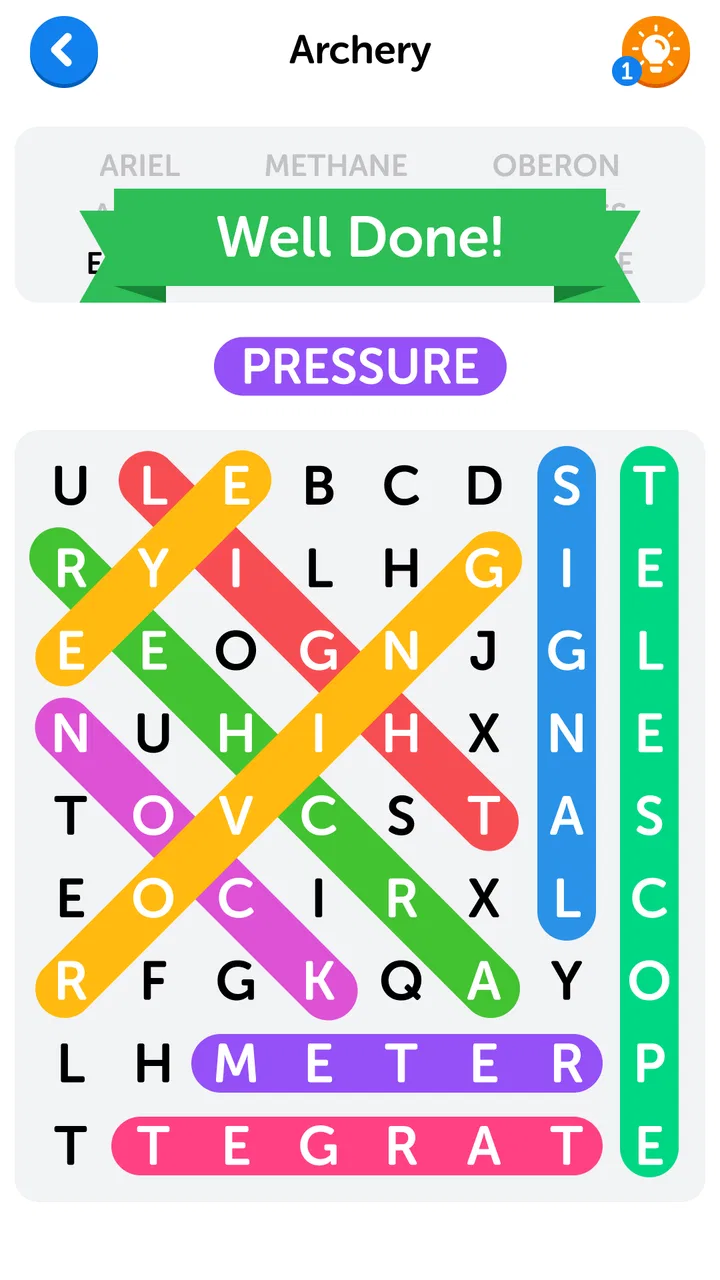
Word Search is a puzzle game designed to enhance vocabulary and cognitive skills. Players search for hidden words in a grid filled with letters. The words can be arranged in various directions—horizontally, vertically, or diagonally. The challenge lies in spotting these words quickly and accurately, making it both fun and educational.
02Is Word Search available offline?
Yes, Word Search can be played offline, making it a perfect choice for on-the-go gaming without the need for an internet connection. This feature allows users to enjoy the game anywhere, whether they’re commuting or in areas with limited connectivity.
03Are there different difficulty levels in Word Search?
Absolutely! Word Search offers multiple difficulty levels to cater to various skill sets. Beginners can start with simpler grids, while seasoned players can challenge themselves with larger and more complex puzzles. This range ensures that all users find the game engaging and appropriately challenging.
04Does Word Search include any in-app purchases?
Word Search is free to download and play, but it may offer in-app purchases. These purchases can enhance the gaming experience by providing additional features, such as new puzzle packs, themes, or hints. Players can enjoy the core game without spending money, but optional purchases are available for those interested.
05Can I track my progress in Word Search?
Yes, Word Search includes features that allow players to track their progress. Users can see statistics such as completed puzzles, accuracy rates, and time taken to solve puzzles. This tracking system helps players monitor their improvement and set personal goals, adding an extra layer of motivation.
Pros
- Intuitive interface for easy navigation.
- Variety of difficulty levels available.
- Customizable themes and backgrounds.
- Daily puzzles to keep users engaged.
- Offline mode for playing on the go.
Cons
- Ads can be intrusive during gameplay.
- Limited word categories in free version.
- Occasional lag on older devices.
- In-app purchases can be pricey.
- No multiplayer or social features.

Word Search
Gallery